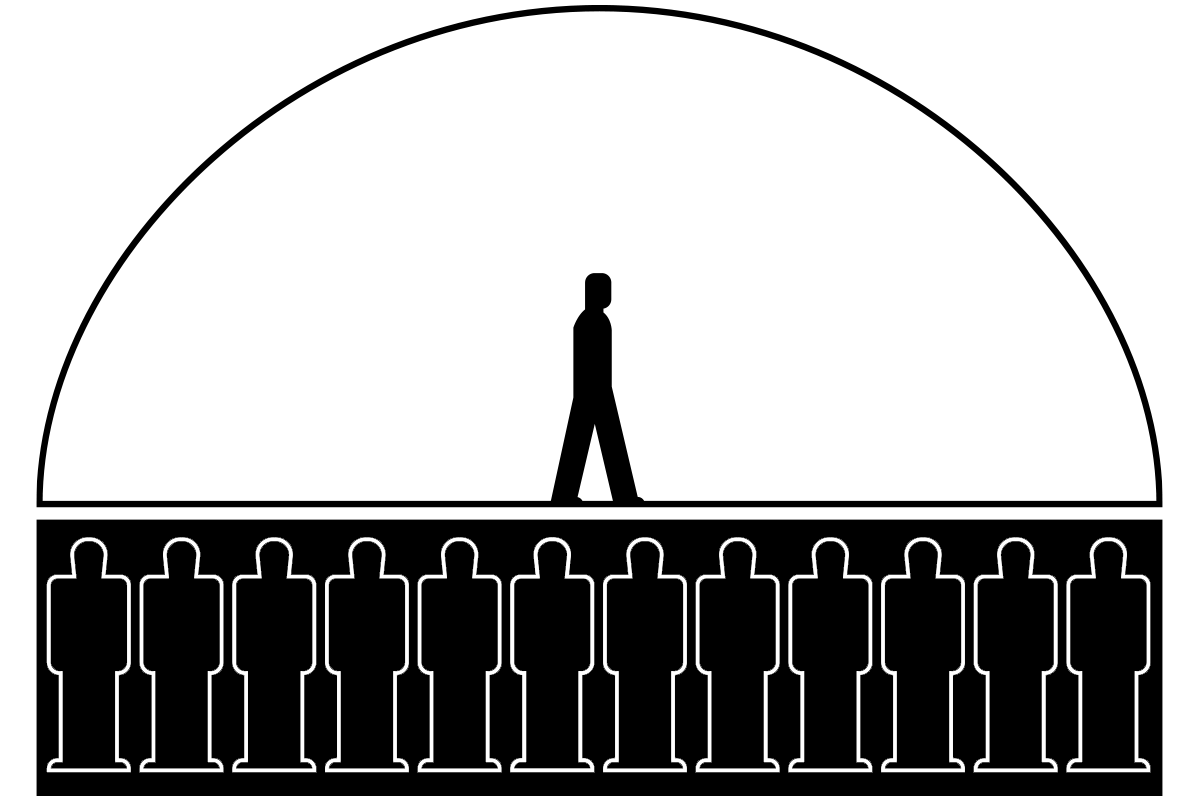
Let me tell you about a city, an ideal city. It’s not the one you’re imagining, the one from Plato, but another city entirely, the real ideal city. The real ideal city looks like this: imagine a great glass dome, a dome that extends for hundreds of miles, with a ceiling so high that it is indistinguishable from the sky above, and a shining city beneath it. Imagine a golden municipal tower. Imagine fields and green gardens, and four-storied townhouses arranged around squares full of flowers. This is the city I’m talking about. Unfortunately, this ideal city is only as beautiful as it is because everything ugly about it is hidden. The real industry of the real ideal city is buried beneath the ground. Now imagine a city that is in every way the opposite of the city I’ve just described. No flowers, no fields, no plants. No light. The citizens of this city are eyeless monsters that hobble from one task to another; they work all day, every day, because they are afraid of being punished. They don’t even know that they work all day because in this city there is no time. They don’t know that what they do is work because they have never known anything but work. They don’t know that there is another city above them, either, even though everything they produce is sent to it, because they have been taught not to ask questions. You could describe them as maximally alienated from their labor because they have no idea what they make or what these objects are used for. These people will never own the means of production and it’s better that way. They are born in darkness, and they die in darkness. The citizens above do not know about the citizens below, or at least they pretend not to. Some of them are clever enough to deduce the presence of another city beneath them; after all, they wonder, where else can all these things come from? The objects themselves are astonishing: lace, silverware, fluted glasswork, embroidered sashes, vetiver, incense, and all manner of ornamental mirrors. These are created alongside basic products like food and fuel, of course. Every single thing that the citizens of the upper layer might desire appears from below via an extensive series of dumbwaiters. They are so busy enjoying this bounty and this wonderfully intricate world of banquets and drawing rooms and masques and amateur theatrical productions that it never occurs to them to contemplate the mechanisms of their satisfaction. So much the better. Like I said, this is the real ideal city. It’s better than Plato’s ideal city and it’s better than those independent city-states in the Mediterranean that your friends are always dreaming up. It’s better than anything out of Ayn Rand, another writer I know you like. None of these citizens are intellectuals; they’ve never invented a single object or made any money. They simply follow the plans laid out for them millennia ago. They don’t ask questions. And that’s it. That’s the real ideal city. I’ll stop now. You clearly want to say something.