A few years ago, I decided to become a Stoic. I needed to stop trying to run away from my husband and our life in a tourist town in the Canadian Rockies. My theory was that, if I could just find a way to accept every undesirable part of my life—from the constant noise of trains rattling our apartment windows to the bites of mosquitoes in summer—then I could accept that I lived far from my family and friends, four thousand miles away in the north of Scotland. Specifically, I could stop being jealous of them as they took pictures of springtime cherry blossoms while I looked out at puddles full of mud, ice, and deer droppings.
So I got to work. I sat for hours by the train tracks near my flat and tried to love the sounds of the train. I tried lucid dreaming, like the composer John Cage, in the hopes of transforming those train noises into visuals that would not rouse me from my sleep at night. (Cage was successful at this; for him a Manhattan burglar alarm lasting several hours came to resemble a Constantin Brâncuși sculpture.)
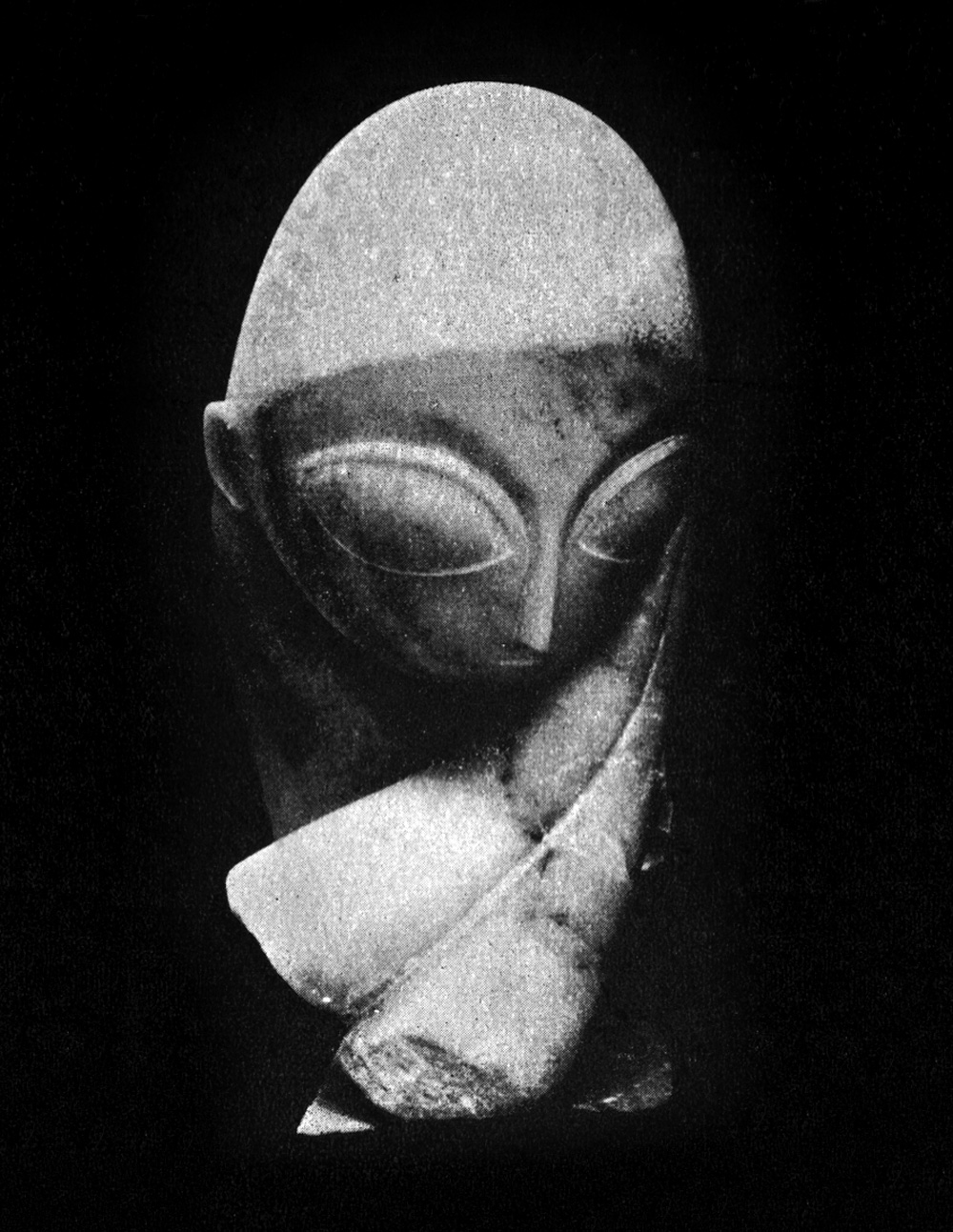
Constantin Brancusi, Portrait of Mlle Pogany, 1912, Philadelphia Museum of Modern Art.
I wasn’t so successful. Loud noises still disturb me when I’m trying to sleep at night. Photographing all the things I hated—mops, linoleum—didn’t make me love them. Getting eaten alive by mosquitoes at the local creek was probably the only project that genuinely altered my natural reactions. I don’t really swat insects anymore (though on the muggiest days, I still keep them at bay with bug spray). Why did this transformation happen? Mosquitoes find me highly attractive. And so when I first decided to observe them, doing so was easy. I sat by the water and a mosquito landed on my skin. She pricked me with her proboscis, swelled with my blood, then flew away. And then came another who did the same, and another who did the same, and another who did the same. Watching these mosquitoes, I became acutely aware that I was being touched by living beings, as real and alive as myself. In other words, after a lifetime of having only an I-It relationship with mosquitoes, our bond transformed to an I-Thou relationship (to use the terminology of the 20th-century philosopher Martin Buber). And it’s only when I’m in a truly filthy mood that I see them again as mere nuisances. Even then, I still won’t kill them.
During this period, I became obsessed with a book called the Carmina Gadelica. It’s a collection of largely Hebridean keens, laments, and praise poems that were chanted in Gaelic for centuries on Scotland’s western islands. They were handed down orally from generation to generation and recorded in the late 1800s by an enthusiastic local exciseman named Alexander Carmichael, who took it upon himself to preserve them at a time when they were vanishing.
When I started reading the Carmina Gadelica—also known as the Charms of the Gaels—what first surprised me was how emotional the verses were. I’d been led to believe that Britain was a place of reserved people, that developing a stoic nature was a part of my cultural inheritance. Yet here were people crying out ecstatically for God’s creations. They were praising the shoots of grass and the little trees of the woods, the pigeons and doves. They were crying out at births and burials. The people of the Hebrides were not, it seemed, suppressing their emotions at all. As I flipped the pages of my paperback copy from Floris Books, I found a very different cultural lineage from the one I thought I knew.
Hebridean though they are, it’s said that the words in the Carmina Gadelica were shaped in the deserts of the Middle East and North Africa. They began with the Desert Mothers and Fathers who withdrew from society and fled into the sandy wilderness in the third century. Those men and women lived in cells, or alone on stone pillars.
What were they up to while the Biblical canon as we know it was coming together in Rome? Drinking water from goatskin bladders. Plucking herbs like birds. Pulling long roots from the sand and making fires to stay warm. Tending to lotus blossoms, roses, and jasmine in their oasis gardens, and eating modest portions of dates from their trees—for they felt that the fewer resources they used, the more there would be for others.
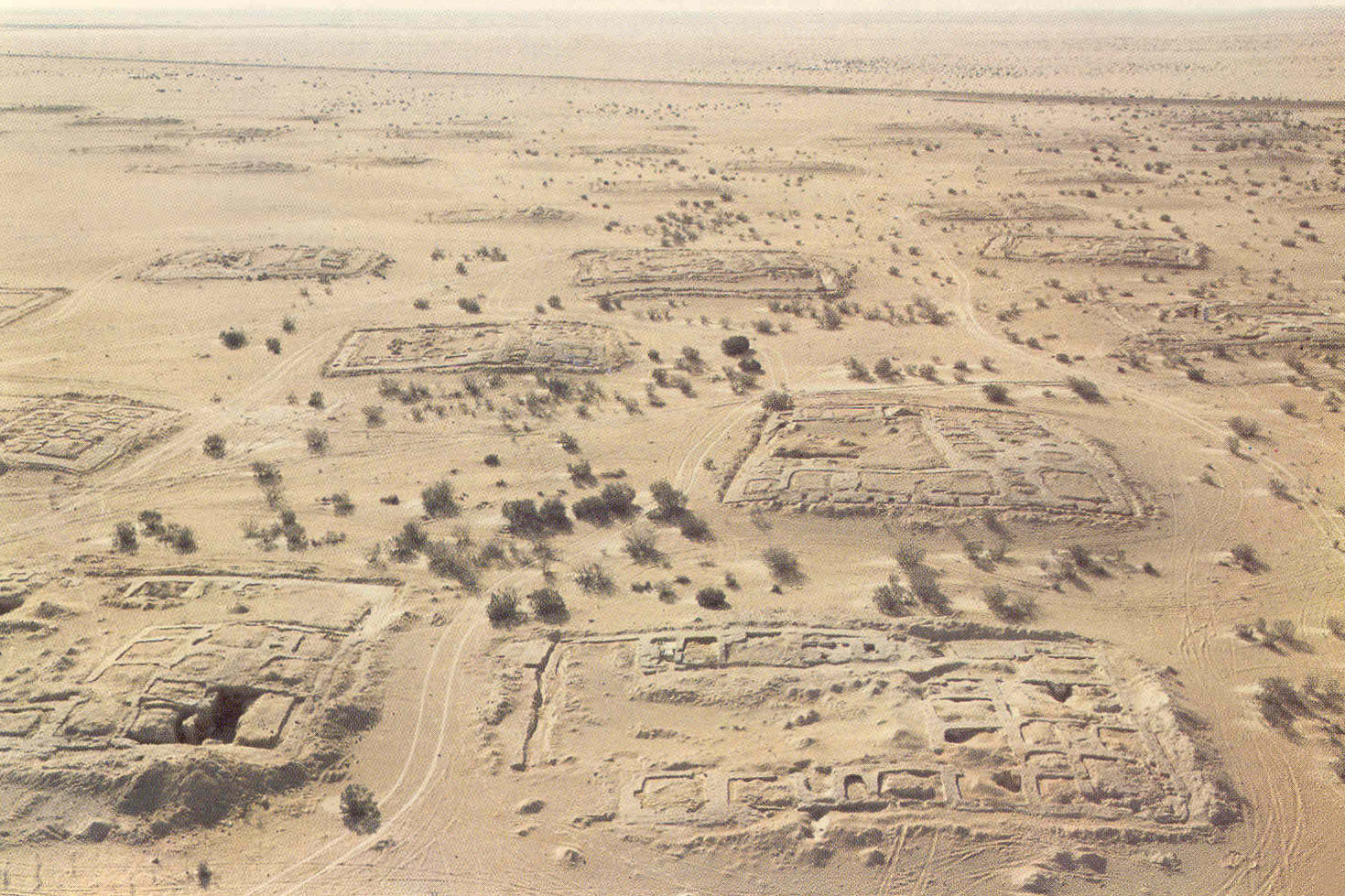
The remains of Kellia, a 4th-century Christian monastic community in Egypt. Credit: Wikimedia Commons.
“When I started reading the Carmina Gadelica—also known as the Charms of the Gaels—what first surprised me was how emotional the verses were. I’d been led to believe that Britain was a place of reserved people, that developing a stoic nature was a part of my cultural inheritance. Yet here were people crying out ecstatically for God’s creations. They were praising the shoots of grass and the little trees of the woods, the pigeons and doves. They were crying out at births and burials.”
They were creating their own version of Christianity, essentially. By giving themselves over to asceticism and praying endlessly with devotion, they were creating the seeds of later monastic traditions. Really, those Desert Mothers and Fathers were praying all night and all day. What ideas were they forming as they did so?
Ideas of rejecting the formal self that exists among others. Ideas of seeking a God they alone could find through prayer. Ideas of saving the world by saving oneself.
Don’t trust my version of events. I just gleaned it from reading modern texts like Esther de Waal’s The Celtic Way of Prayer: The Recovery of the Religious Imagination (Doubleday) and Thomas Merton’s The Wisdom of the Desert: Sayings from the Desert Fathers of the Fourth Century (New Directions). And the problem with my reading is that I’m a romantic. To be a romantic trying to interpret the past holds obvious dangers. It’s so easy to hold up ancient history’s threads—which at this point is little more than a moth-eaten piece of cloth, formed from apocrypha and artifacts—and decide it represents something golden, more beautiful than anyone could possibly imagine.
Still, the romantic frame of mind can’t be helped, and from my understanding, here’s what happened: the movement of Desert Mothers and Fathers grew and grew. Eventually there were tens of thousands of people living in organized communities or alone as stylites. Their ideas travelled beneath the surface of the dominant Christian ideology to folk cultures all over Europe. Across the centuries, monks from the desert were sailing around the coast of North Africa; up to Gaul, Lérins, Auxerre, Ireland, and Iona, where they formed small monasteries and brought their own distinct version of the Christian message with them.
The land on the far western edge of Europe became a burning bush entwined with pagan visions, and new chants began to ring out as the people kindled their fires, milked their cows, spun their wool, and made their shoes.
And the Christian God, in those rural backwaters influenced by drifting monks, was not a bearded man living in golden clouds, looking down. That is perhaps a Roman version of God derived from images of the sky-god Jupiter. This new God was formless, genderless, infinite.
“There was a man in Arisaig,” Carmichael wrote, “and he was extremely old, and he would adore the sun and the moon and the stars. When the sun would rise on the tops of the peaks he would put off his head-covering and he would bow down his head, giving glory to the great God of life for the glory of the sun and for the goodness of its light to the children of men and to the animals of the world. When the sun set in the western ocean the old man would again take off his head-covering, and he would bow his head to the ground and say a prayer. The old man said that he had learned this from his father and from the old men of the village when he was a small child. Mannerless children would be mocking Iain, thinking that he was not all there.”
Why were the children mocking that old man as he went about with his harmless acts? Such actions had been formally suppressed since the Scottish Reformation of 1560. People were still bowing to the sun and the moon after that; such actions and beliefs don’t die quickly. But they were being carried out only quietly, from then on, with trusted others.
That old man was a rare one, carrying on the old, pre-Reformation ways in public right into the nineteenth century. Praising every living creature as soon as he was up in the mornings.
One Mary Macleod lived alone on Barra; she was old and poor. She said to Carmichael: “In the time of my father and my mother there was no man in Barra who would not take off his bonnet to the white sun of power, nor a woman in Barra who would not bend her body to the white moon of the seasons. No, my dear, not a man nor a woman in Barra. And old people will still be doing this, and I will be doing it myself sometimes. Children mock me, but if they do, what of that? Is it not much meeter for me to bend my body to the sun and to the moon and to the stars than to the son or daughter of earth like myself?”
Is it not much meeter for me to bend my body to the sun and to the moon and to the stars than to the son or daughter of earth? It is. It’s not easy though. It’s a bit embarrassing to be doing such things in this day and age. Even the thought of being caught bowing to a celestial object makes me feel ashamed.
It’s no good, being so easily ashamed. To bolster myself into doing more harmless, shameful acts, I began writing down those lines about the sun and the moon and the stars again and again, by hand.
To face my shame head on, I decided, for various reasons, that I would go barefoot to the shop. Why not? It’s a harmless thing, going about without shoes on. I’ve read it’s common practice in the beachy parts of Australia and New Zealand. I’ve read it wasn’t even that uncommon in Scotland a couple of centuries ago. According to a journal entry from Dorothy Wordsworth’s Recollections of a Tour Made in Scotland, A.D. 1803, she and her poet brother William watched with delight as women in the countryside held their shoes and stockings in bundles on their arms and headed barefoot through some meadows.
Yet I was neither in Byron Bay nor in the Loch Lomond of two hundred years ago. I was living in a mountain town where the main grocery store specifically had posters on the main doors stating: “No Shirt No Shoes No Service.”
Whatever. I went into the shop with no shoes on, and absolutely nobody noticed, nor seemed to care.

The author’s handwritten copy of lines from The Carmina Gadelica.
Those words that convinced me to go barefoot were not my favorite words in the Carmina Gadelica, though. The words I loved best translate into English as something like:
“I am kindling the fire this morning,
In the presence of the holy angels of heaven,
the presence of Ariel of the loveliest form.
In the presence of Uriel of the myriad of charms,
Without malice, without jealousy, without envy.
But the Holy Son of God to shield me.
God, kindle Thou in my Heart within,
A flame of love to my neighbor,
To my foe, to my friend, to my kindred all,
To the brave, to the knave, to the thrall.
O Son of the loveliest Mary,
From the lowliest thing that liveth,
To the Name that is Highest of all.”
Reading these lines didn’t help me accept my circumstances; they didn’t turn me into a great Stoic like Marcus Aurelius’s daughter Annia Cornificia Faustina Minor, who quietly severed her own veins to showcase her reserve.
They did, to an extent, help me accept the fate that is my personality: flawed, impressionable, and as jealous, it seems, as my ancestors. To know that in my malice and envy, I’ve been travelling in ancient company, has been a lovely thing.
By trying to love the trains and the summer insects, I found that actually, I was not capable of transforming myself. I could suppress certain emotions for short periods, but those emotions always came bursting forth when I was at my lowest ebb (usually when I was nearing the end of my luteal phase). The fact was I hated where I lived, and that was that.
A couple of years ago, after we both decided we needed a change of scene, my husband and I left that mountain town for a remote part of the Canadian Badlands. It’s so dry here that for six months of the year I can feel like I’m in a desert. On the backroads, the surrounding fields are filled with sagebrush and small cactuses. And I like it.