Seen one way, growing up is having your assumptions about the world splinter. It happens again and again, bleaker each time, even in the impersonal: maybe you spend months, maybe a year or two, thinking of the world as made up of objects, but then you come to understand that you can break them up. These objects are made up of smaller parts, you realize, and then you’re taught, formally, about particles—these are now the smallest unit. It gets faster—you’re quickly told that these once-ultimate units are in fact themselves divisible (this is the basis for their interactions) and then that those parts can themselves decay, over time, into something smaller—in fact, most of the atom (most of everything, then) is empty space, held together by webs of repulsion and attraction.
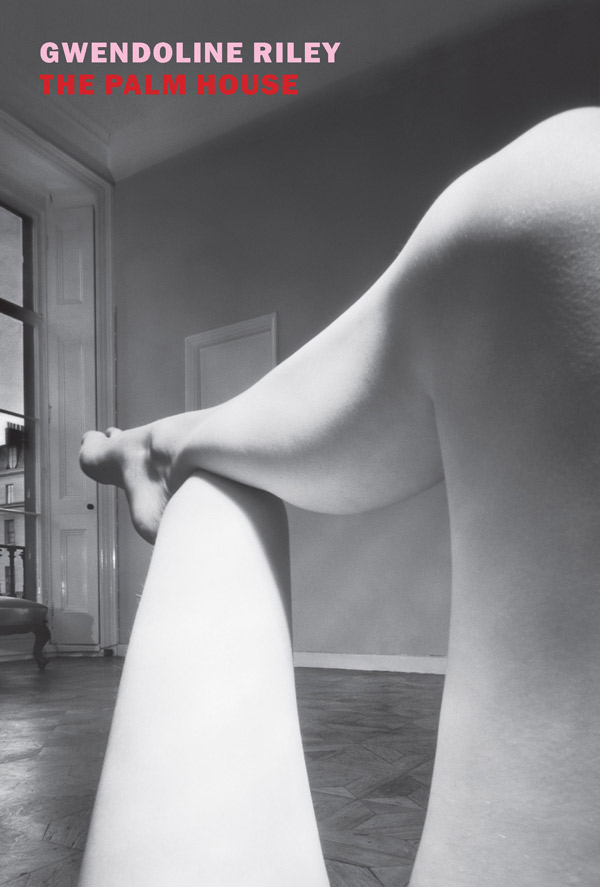
The Palm House
By Gwendoline Riley
New York Review Books, 224pp
Gwendoline Riley’s last two novels, First Love and My Phantoms, both deal with this manner of deflated realization and cultivated, complicated disappointment vividly and carefully. They were pointed and narrow, each closely (though never exclusively) concerned with a particular dynamic: between a younger woman and her often-vindictive older husband; between a daughter and the often-grating mother she’s having to look after. Early in both books, a horrible father is conjured and then swiftly dismissed.
The fact that you could find shades of much of this across Riley’s first four novels doesn’t at all detract from their charm. At no point do these books go to great pains to claim plot-based novelty; the draw is Riley’s warm and bleak acuity for damning detail, her knack for finding and illuminating the tiny facets of people and places that defy their scale to irreversibly paint (often, taint) the whole.
Here’s Neve, the narrator of First Love, describing her mother’s new flat:
There was something haphazard about her arrangements. The living room and kitchen were open plan, but she’d bought what she told me now was ‘a room divider’: in fact an overbearing black bookcase, which served to make both areas feel cramped.
Very little in these novels escapes this horrible synecdochic treatment. Once someone’s been shattered, they become either repulsive or pitiable, and core to both of those affects is recognition—an understanding beyond the communicable that has to have come from within.
Riley makes the reflexivity in that process explicit through Carmel, the narrator of Cold Water, her first novel:
Sometimes I have this desire, this strange desire, for somebody to really tell me, beyond argument and without mercy, exactly what they know about what I am, to ridicule my clothes, to tear apart my tastes, my pretensions, my sentimentality, to take me by the collar and lay it on the line. I want to burn with that truth. It’s an idle, narcissistic daydream I have.
Recognition isn’t how you give life to things, it’s how you take it away. Simple, indisputable knowledge can unravel.
• • •
Since Riley’s last novel was published in 2021, UK couples have gained the option of a no-fault divorce. Somewhat relatedly, the last few years have seen a flurry of reconsideration around the practice. New novels and memoirs recast the end of a marriage as freedom, focusing on a renewed youth, a new awareness. Though most of those books are told from an adult perspective, that experience is also familiar to children of divorce, freed at a young age from one united source of truth. Once a household cleaves in two, laid bare as made up of distinct, fallible individuals, a child’s world changes forever—they are cast out of the ancestral Garden, burdened with forbidden knowledge. A child from a steady home doesn’t have a reason to question how things are done, because their primary distinction is between the intact bubble and the world outside, the default and the deviant. A child between two spheres, though, sees the arbitrary nature of them both. They can feel richer for it, because to truly recognize something is to pick it out from its setting, to register its difference.
As Nicole Flattery put it in the LRB, Riley is “fluent in the language of divorce”—a doomed foundational duality animates all of her work. Though The Palm House doesn’t break from that lineage, it feels larger in scope than her first six novels, a lot more interested in what comes after that knowledge. Her sharp eye is both more expansive and a bit softer. A twitchy, insecure mother is a much smaller presence, but appears nonetheless. At one point, in a pub, she talks to Laura, the novel’s narrator, about no longer working, having been offered redundancy at 62:
“What won’t I do?” she said.
“Spend spend spend,” she said, “ha ha ha.”
Riley often leaves a character to speak in little bursts like this, feeds them enough rope. It’s always itchy, a blend of compulsion and distress, a desperate hope that the next thing they say might offer some relief.
More present across the novel is Putnam. He’s been an editor at Sequence magazine, whose new “bellowing” editor, who goes by “Shove,” is running the ship into the ground. (This seems to be a not-particularly-subtle fictionalization of the recent history of a storied London-based literary magazine.) Resigned, Putnam resigns, leaving himself to contemplate potential futures and stew over the perceived injustices of the past. Later in the novel, Putnam takes stock of his new life in a similar fashion to Laura’s mother:
“I have lots of time, now, of course,” he said.
“Time will not be a problem,” he said.
You can see the parody in these couplets—once someone has seen themselves for what they are, everything they do becomes undead satire.
The Palm House deals directly with the comedic side of self-construction. Its second section recounts how Laura, as a teenager, is fixated on Chris Patrick, a comedian whose routines are predicated on his pitiable escapades: “And given that he was so guileless, too, so innocent, really, a mug, a mark, he got into some appalling situations, some mortifying scrapes.” He repeats, again and again, that he is lonely. Laura starts sending him tapes of her speaking to him.
Waiting to see him after a gig, Laura tries to establish herself as distinct from the other waiting girls, avoiding being “immediately identifiable as someone who had just come out of the show,” but, on the other hand, modelling herself on bits of Anna, the new, older friend she makes through attending the gigs. We get a few images of unsteady balancing. Chris Patrick eventually recognizes Laura as the sender of the tapes, and starts seeing her and Anna after gigs. His prefab schtick—made up of things like the “squeeze[s]” he demands from Anna and Laura—becomes more grotesque through insistence. The end of the episode is harrowing both for the events recounted and for the way both Chris Patrick and then Laura’s mother collapse into papery clichés around them.
Lawrence Wells, an actor Laura meets through a friend as an adult, is an easier comic figure. Before they meet, her friend Craig explains him:
“He’s a lovely man,” he said. “A fucking great actor. But I’ll put it like this—sometimes, when he’s talking, you would not be astonished to look down and see a spinning bow-tie round his neck.”
It doesn’t happen all at once, Riley seems to tell us, but it’s a hard fate to avoid, lapsing into a comic costume of what you have decided you are.
“The bow-tie is spinning quite slowly, currently. But it could speed up. I mean, it will. It will speed up. That’s what life does.”
Despite the bow-tie, Laura sleeps with him after the party (in the expensive flat he lives in, decrepit through neglect), and then starts seeing him for a while a little later on, after bumping into him. Once, at his place, she makes martinis and accidentally encourages a performance:
I had been expressing appreciation, I thought, as you did when something was over, or when you wanted to indicate that it should now be over. He thought I wanted an encore.
Mixing our second drink, later, I went all-in with the cocktail shaker, while he motored about in character at the other end of the room.
How does this end? I thought.
Nearly everything in the novel twists like this. People either speak in already-canned speech, or what at first seems original curdles after too much churn. Everyone who meaningfully appears in the book seems to be wrestling with the risk of becoming a caricature, contorting into familiar shapes after failing to find richer options.
Laura isn’t spared—Lawrence’s performance comes after her own sequence, performed to presumptive silence: “Clink-clink!” “Here you go,” “Very good,” then, finally, holding an empty packet of crisps: “Rustle-rustle.” This is the closest Laura comes to resembling her mother, who calls this indefatigable, slightly pathetic sociality being “outward-facing.” This is the burden of recognizing façades for what they are—when you try to construct your own, they’re inevitably brittle, either pandering or pig-headed.
The alternative to the risk of the flat performance is, then, an inward turn. That’s what Craig chooses:
Had Craig evaded the bow-tie fate? Could anyone? He was married now, with a daughter, Dorothy, and another baby on the way. A family was what he’d always wanted. He talked about meeting his wife, Usha, with a palpable sense of near-miss […] He’d cashed in, he used to say, in the last hours of his handsomeness, to secure a loving companion. He was a Christian, now, too.
Chemical entities with unpaired electrons (free radicals) don’t stick around for long. They find something to bond with, or, if they can’t, they do indiscriminate damage—making themselves whole by stripping electrons from anything they can find, leaving new incomplete entities behind. Maybe this is the point—if you’re lucky, out of randomness, you find a suitable pair, trade away your scraped-together appeal into an attraction, become a larger, stable whole.
Or is it? That last detail is a useful one, another tucking within institutional walls.
“I’m happy,” he said, when talking about that. “I mean I’m miserable, obviously, but I am happy, because I see a bigger picture, and I know I’m not alone.”
Craig has made his wholesale commitment to structure as a reprieve—God and marriage are both rubbery guards that buffer the world’s jagged edges from his own. Riley raising them together like this is not a declaration of them as good or bad, just a recognition of their resonances, both elective preclusions of possibility.
“Riley is ‘fluent in the language of divorce’—a doomed foundational duality animates all of her work. Though The Palm House doesn’t break from that lineage, it feels larger in scope than her first six novels, a lot more interested in what comes after that knowledge. Her sharp eye is both more expansive and a bit softer.”
• • •
Another hallmark of growing up inside a divorce—because you’re shuttled between them, you notice what each of your homes is like, how they smell, how the air sits, just as well as a guest might. It’s hard to imagine a Riley novel without a coming-to in a cold, new room, filthier than it seemed the night before, a layer of dust or grease over everything, some sort of muck on some sort of textile. Not so much regretful as forlorn—clarity inevitably following calamity.
Much of the action in Riley’s earlier novels takes place away from home, in bars and on buses, in hotels and in transit. In Sick Notes, Esther lives amidst her boxed-up belongings—“no clutter, no personality, just grey light on flat surfaces”—and makes messes. Objects aren’t just idle furniture; she breaks plates and a teapot, leaves the shards lying there, feeling a bit of relief. It’s by no means unrepentant, and Esther does reflect on the consequences of her impulses:
People who seem to be cowards or martyrs bring out the ugliest feelings in me: blasts of scorn which I can feel flashing in my eyes. I think they’re being cheap with their lives, that’s why. So they seem ravenous for the worst thoughts I can have. That’s why I was the way I was with Mum, too. I’m not making excuses, I’m being honest. Now I look round this bare room, and feel sick with myself for the way I was to her just because she wanted friendly, familiar things around her. Because, God knows, me and my brother were neither of those things. She grew us in her stomach then we ate her alive.
There was a fondness for place in Riley’s prior novels, and though the place was rarely home, the underlying impulse was the same—one wants “friendly, familiar things around.”
• • •
The marriage plot, as an arc, is about a welcome reduction in complexity and possibility, a problem solved. That’s what makes it boring. A divorce isn’t a neat mirror, because things tend not to come apart as neatly as they join.
Sequence, the literary magazine, remains important to Putnam’s life, even after he leaves. He still lives in the flat he bought to be able to walk to work, and the magazine’s people remain fixtures of his social life. This is notably true of his relationship with Katherine—they used to be together, quite seriously, and were then close colleagues. Though she has since married and had kids with someone else, the relationship is still fond. After “Shove” is ousted from Sequence, they’re at the pub as part of a group, and Putnam tells her a story: Once, Putnam asked his (widowed) father if anything came of his relationship with a woman he knew from a café he patronized, and the question made him cry. Putnam tells it: “Later, he said ‘Obviously I was a bit older, but I had hopes.’” Then, in the novel’s last instance of doubled speech: “‘I had hopes,’ said Putnam, to Katherine; his eyes were wide.” Katherine “had his hand and was squeezing it.”
The novel ties things up in its short final chapter, barely a page long. Katherine is now Editor of Sequence; Putnam is Editor-at-large. Laura is in a flat—hers, one she’s bought—paying attention to its flaws, though not in a condemnatory way:
There was condensation on the skylight. The window frame was turning black in places. I’d have to see to that.